

A house is only as good as what it stands on, and that’s precisely why concrete foundation contractors exist. These are the tradespeople who translate a set of engineering drawings into a solid, level, load-bearing base that everything else walls, floors, even the furniture you eventually arrange inside depends on. Get the foundation wrong and no amount of good design further up the build can fix it.
Whether you’re planning a new build, replacing a cracked slab, or finally sorting out that patio you’ve been dreaming about for the garden furniture set you bought last summer, understanding what these professionals actually do (and why cutting corners is never worth it) will save you money, stress, and quite possibly a very expensive repair bill down the line.
Who Are Concrete Foundation Contractors?
Concrete foundation contractors are licensed specialists who design, pour, and finish the concrete base that supports a structure. Unlike a general builder who might touch concrete as one part of a much bigger job, foundation specialists live and breathe soil conditions, reinforcement schedules, drainage, and curing times. It’s a narrow trade, but an enormously important one.
What Their Day-to-Day Work Actually Involves
- Assessing soil composition and load-bearing capacity before any concrete is mixed
- Designing footings, slabs, or pier-and-beam systems suited to the property
- Installing formwork, rebar, and mesh reinforcement to specification
- Pouring, levelling, and finishing concrete to the correct depth and grade
- Managing curing time and weather conditions so the concrete reaches full strength
- Carrying out inspections and liaising with building control where required
It’s worth noting that reputable firms, such as Valley Pro Concrete, also handle everything from small residential slabs to larger structural work, which means you’re not juggling separate contractors for the foundation and the finishing touches.
Why Hiring Professional Concrete Services Matters
There’s a persistent myth that concrete is a simple, forgiving material – mix it, pour it, done. In reality, professional concrete services exist because the margin for error is slim and the cost of getting it wrong is not. Incorrect water-to-cement ratios, poor compaction, or skipping reinforcement can lead to cracking, settling, or outright structural failure within a few short years.
DIY Versus Hiring a Professional
It helps to see the difference laid out plainly. With a DIY approach, soil testing is often skipped entirely, reinforcement is left to guesswork or omitted altogether, and equipment is usually rented gear the homeowner has never used before. Curing is rarely managed properly, there’s no warranty to fall back on, and the long-term cost tends to be higher once repairs become necessary.
Professional concrete services take the opposite approach at every stage. Soil is assessed before any work begins, reinforcement is engineered to the actual load requirements, and crews arrive with purpose-built machinery rather than rented tools. Curing is monitored for weather and timing, the work comes with a genuine workmanship guarantee, and the lifetime cost ends up lower simply because it’s done properly the first time.
Expert Tip: Always ask a prospective contractor for references from jobs completed at least two to three years ago. Freshly poured concrete looks fine on day one – it’s how it holds up after a few winters that tells the real story.
The Foundation Process, Step by Step
Understanding the sequence helps you ask the right questions when you’re interviewing contractors, and it explains why a rushed job so often ends badly.
- Site assessment and soil testing to determine the right footing depth
- Excavation and grading to the required levels
- Formwork installation to contain the concrete pour
- Placement of rebar or wire mesh for tensile strength
- Pouring the concrete and vibrating it to remove air pockets
- Finishing the surface and allowing controlled curing, typically 28 days for full strength
- Final inspection before any construction continues above the foundation
Beyond Foundations: Concrete Patios and Outdoor Living
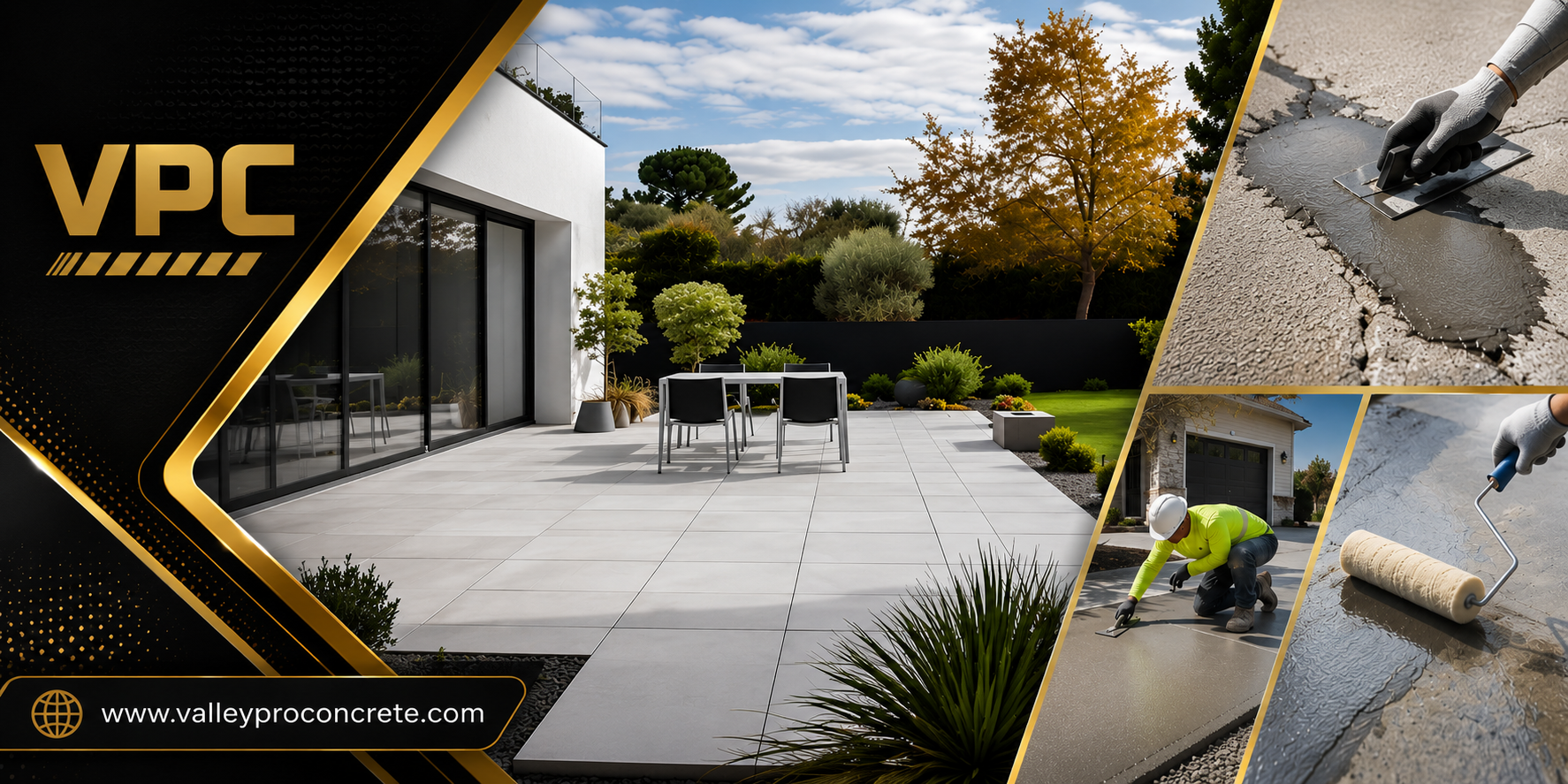
Foundations aren’t the only place this trade earns its keep. A huge number of homeowners searching for really searching for the start of an outdoor living space – somewhere to put a dining set, a fire pit, or that rattan sofa that’s been sitting in the garage waiting for a proper base. A patio poured by the same standards as a house foundation – correct sub-base, drainage falls, and control joints – will outlast a rushed slab by decades.
If you’re planning outdoor furniture as part of the project, it’s worth browsing concrete patio services before you buy anything, since the size, shape, and slope of the slab will influence how furniture sits and drains after rain.
Furnishing a New Concrete Patio
- Choose furniture with adjustable or wide feet to sit evenly on broom-finished or stamped concrete
- Leave a slight gap from slab edges so water can run off without pooling under furniture legs
- Heavier stone-topped or cast-aluminium pieces need a fully cured slab (around four weeks) before placement
- Rugs and cushions rated for outdoor use help protect both the furniture and the concrete finish
It’s a nice reminder that concrete work and furniture choices aren’t separate decisions – they influence each other more than most people expect.
Structural Concrete Repairs Services
Not every job starts from scratch. A great deal of a foundation contractor’s workload involves diagnosing and correcting problems in existing concrete – hairline cracks that widen over time, slab settlement, or spalling caused by years of freeze-thaw cycles. Reputable structural concrete repairs services will start with an inspection to work out whether an issue is cosmetic or genuinely structural before recommending a fix, rather than jumping straight to the most expensive option.
- Epoxy or polyurethane injection for non-structural cracks
- Slab jacking or mudjacking to correct settlement
- Underpinning where the original footing has failed
- Waterproofing and drainage correction to prevent recurrence
Choosing the Right Concrete Contractor
Location matters more than people assume. A concrete contractor modesto ca homeowners hire needs to understand Central Valley soil conditions, seasonal temperature swings, and local permitting – none of which a contractor unfamiliar with the region will handle as confidently. This is exactly why firms like Valley Pro Concrete build their reputation on local knowledge rather than a generic one-size-fits-all approach.
Checklist Before You Hire
- Valid state licensing and insurance, confirmed in writing
- A written estimate that breaks down materials, labour, and timeline
- Photographs or references from projects at least two years old
- Clear explanation of reinforcement and drainage plans
- A workmanship warranty, ideally five years or more
Expert Tip: Get at least three quotes before deciding, and be wary of any figure that’s dramatically lower than the others – it’s usually a sign that reinforcement, sub-base preparation, or permitting has been left out of the price.
What Does Concrete Work Typically Cost?
Pricing varies with region, access, and finish, but a realistic starting range for common projects in the United States looks something like this. A standard house foundation typically runs $6 to $16 per square foot, depending largely on soil conditions and footing depth. A concrete patio generally costs $8 to $18 per square foot, with stamped or coloured finishes pushing towards the higher end. Driveways sit around $7 to $14 per square foot, with reinforcement adding to the overall price. Structural crack repairs tend to cost between $300 and $1,200 per repair depending on severity and access, while slab jacking or levelling comes in at roughly $4 to $8 per square foot – considerably cheaper than a full slab replacement.
If your project also includes a driveway or stamped concrete finish, it’s worth discussing both jobs with the same contractor – matching the sub-base preparation across a driveway and patio often reduces overall cost and keeps drainage consistent across the property.
Frequently Asked Questions
How long does a concrete foundation take to cure?
Concrete reaches roughly 70% of its strength within seven days but is generally considered fully cured at 28 days. Reputable concrete foundation contractors won’t allow heavy loads or framing to begin before that point.
How do I find reliable concrete patio pouring near me?
Start with local licensing boards, check reviews that are at least a year or two old, and ask to see a completed patio in person rather than only photos. A short site visit tells you far more about finish quality than any portfolio.
What’s the difference between a general contractor and professional concrete services?
A general contractor oversees an entire build and may subcontract concrete work, whereas a specialist concrete company focuses solely on foundations, slabs, and repairs, typically with deeper technical knowledge of mix design and curing.
Do I need a permit for a new concrete patio or foundation repair?
In most US municipalities, yes – foundations almost always require a permit, and many cities require one for patios above a certain size too. A local contractor familiar with your area’s rules, such as Valley Pro Concrete, can usually handle the permitting process on your behalf.
Can cracked concrete be repaired instead of replaced?
Often, yes. Structural concrete repairs services can assess whether cracking is cosmetic settlement or a genuine structural issue, and in many cases injection or slab jacking resolves the problem at a fraction of full replacement cost.
What should I look for in a concrete contractor Modesto CA homeowners can trust?
Look for a company with an established local presence, clear licensing, and experience with Central Valley soil types. Ask for a written quote and a realistic timeline, and don’t be afraid to request references from nearby projects.
Conclusion
Concrete foundation contractors do far more than pour a slab – they set the standard for everything that comes after, from the stability of a house to the comfort of the outdoor furniture sitting on a patio years later. Whether you need a full foundation, a new patio, or a repair to something that’s already showing its age, choosing a contractor with genuine local experience and a transparent process makes all the difference.
Ready to get your project started? Get a free quote from Valley Pro Concrete and speak to a team that treats every foundation, patio, and repair as if it were their own home.
Browse more guides and project ideas on the Valley Pro Concrete blog before you begin a little research now saves a lot of hassle later.