

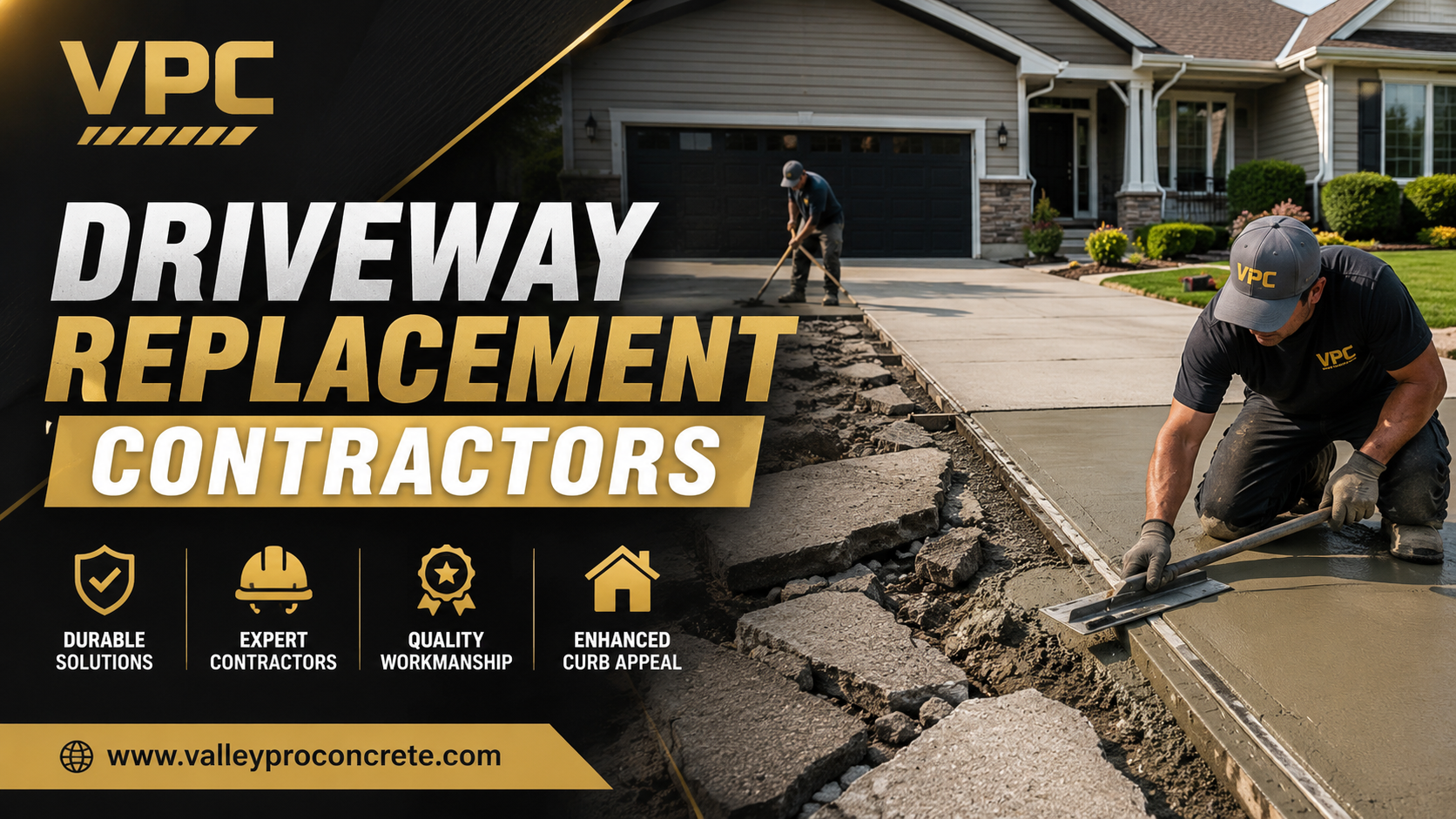
A driveway is one of the first things people notice about a home, and one of the hardest-working surfaces on any property. Between daily traffic, shifting soil, and years of weather, even a well-poured slab eventually needs attention. That is where experienced driveway replacement contractors come in. Their job goes well beyond pouring fresh concrete; it is about building a surface engineered to outlast the one before it.
Here we’ll examine the difference between a well-executed driveway replacement and a patch job, how a contractor handles concrete work, and why many homeowners are choosing to invest in their driveway alongside the home’s stamped concrete, patio concrete, and outdoor living space upgrades.
What Makes Driveway Replacement Contractors Different From DIY Repairs
Filling in a crack or a pothole appears to be a solution, but it does not solve the problem. A competent contractor examines the situation before diving under the surface, that is, before touching a bag of concrete.
The Hidden Work Beneath Every Driveway
Most driveway failures start below ground, not on top of it. No matter how thick the slab is, a few years into the job it will crack if the base is poor, if it is not stable, or if it expands and shrinks from the seasons. A complete replacement requires:
- Completely removing the old slab, even where it may be damaged and patchwork repairs would be left to remain
- Sloping the terrain away from the house so that the water flow does not pool near the home, but goes away from it.
- Compacting a stable subbase that will not shift when loaded by vehicles
- Including reinforcement (rebar, wire mesh) in sections subjected to the greatest loading
Materials and Reinforcement That Actually Hold Up
Designing a concrete mix is as important as installing it. Driveway contractors specialize in driveways and are familiar with the proper thickness, curing time and joint spacing for the local climate. Early cracks usually result from rushed jobs that do not allow the time for curing or pour a thinner mix than the site requires.
The Role of Professional Concrete Services in Long-Term Durability
Longevity is not an accident. It is based on a repeatable process that professional concrete services employ on every job, regardless of its size, whether it is a driveway or a patio.
Site Preparation and Grading
Water is the single biggest enemy of concrete. A slab that traps moisture underneath it will heave, crack, and settle unevenly. Experienced crews grade every site so rainwater moves away from the house and the driveway itself, which is a step that is easy to skip and expensive to fix later.
Reinforcement, Thickness and Load Capacity
A driveway that only sees a sedan needs different specifications than one that regularly holds a truck, trailer, or RV. Getting this wrong is one of the most common reasons driveways fail early, and it is exactly the kind of detail a seasoned concrete contractor accounts for before the pour begins.
Weather and Soil Considerations
Soil type varies enormously from one region to another, and so does exposure to freeze-thaw cycles, heat, or heavy rain. Local knowledge of these conditions is a genuine advantage, since a mix and base design that works in one area can fail in another.
Stamped Concrete Contractors: Adding Style Without Sacrificing Strength
Not every driveway or walkway needs to look like plain grey concrete. Stamped concrete contractors use textured patterns and colour to mimic the look of brick, slate, or natural stone, while keeping the strength and low maintenance of a standard concrete slab.
Popular options include:
- Ashlar slate patterns for a natural, upscale look
- Cobblestone textures for a classic, timeless driveway edge
- Wood-plank stamping for pathways and porch approaches
- Custom colour blends to match brick, siding, or trim
Patio Concrete and Outdoor Living Spaces
Driveway work is often the first step in a bigger outdoor upgrade. Many homeowners follow it up with patio concrete projects to create a proper entertaining space at the back or side of the house.
A well-planned patio slab does more than sit under a table and chairs. It sets the foundation for how the whole outdoor area will be used and furnished.
Choosing Concrete That Complements Your Outdoor Furniture Layout
Before pouring a patio, it is worth thinking about furniture placement, walkways, and how much shade or sun the space gets throughout the day. A few practical pointers:
- Leave at least 3 feet of clearance around dining sets so chairs can be pulled out comfortably
- Plan a slightly larger footprint if you intend to add a fire pit, outdoor sofa, or sectional later
- Consider a broom-finish or lightly textured surface near seating areas, since smooth stamped concrete can be slippery when wet
- Match the concrete tone to your furniture and exterior colour scheme for a cohesive, finished look
This type of patio tends to wear well not only physically but aesthetically too because furniture and surface were conceived as a whole, not in a disjointed manner.
Signs You Need Driveway Replacement, Not Just a Repair
It is not always obvious when a driveway has moved past the point of patching. Watch for:
- Cracks longer than a few feet, or ones that keep returning after being filled
- Sections that sink, tilt, or hold standing water after rain
- Crumbling edges or a surface that flakes and pits (known as spalling)
- A layout that no longer suits the number of vehicles or how the driveway is used
If two or more of these apply, it is usually more cost-effective long term to work with a structural concrete specialist on a full replacement rather than continuing to patch a slab that is past its structural life.
How to Choose the Right Driveway Replacement Contractor
Not every concrete contractor approaches a project the same way, so it pays to ask a few direct questions before signing a contract.You can learn more about a company’s background and completed projects on pages like their about page, which is a quick way to gauge experience before requesting a quote.
Cost vs Value: Why Quality Concrete Work Pays Off Long Term
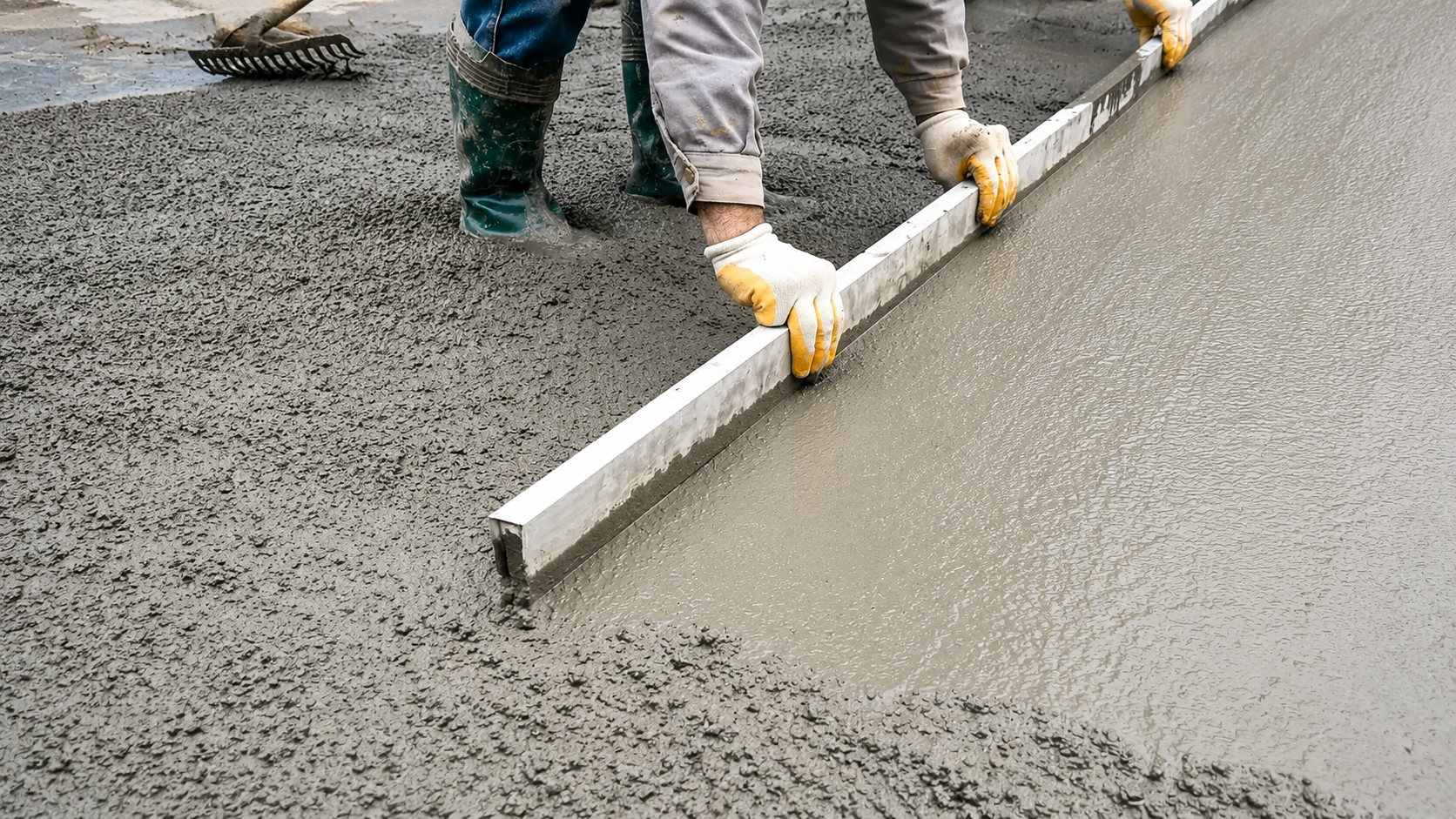
Although it is true that your patio or driveway installation may be more expensive at the start of the process as compared to fixing them temporarily, in most cases, it is not true for the duration it lasts. Proper installation may last up to twenty to thirty years.
Adding up all these costs and thinking about the effect that bad drainage can have on your house and how it looks, it makes more sense to do it correctly once rather than repeatedly fixing it.
Frequently Asked Questions
How long does a concrete driveway replacement take?
Most residential driveway replacements take three to five days from demolition to a fully cured, drivable surface, though this can vary based on size, weather, and whether reinforcement or drainage work is needed.
Is stamped concrete more expensive than a plain driveway?
Yes, stamped concrete generally costs more than a standard broom-finished slab because of the added labour, colouring, and sealing involved. Many homeowners find the improved curb appeal and resale value worth the difference.
Can I install patio concrete and a new driveway at the same time?
Combining projects is common and can reduce overall costs, since equipment, delivery, and site setup are shared across both jobs rather than scheduled separately.
How do I find a reliable concrete contractor near me?
Look for a local concrete contractor with a track record of completed residential work, clear warranties, and transparent pricing. A company such as Valley Pro Concrete that offers professional concrete services and is upfront about site preparation, thickness, and curing time is generally a safer bet than the lowest quote on the table.
Does a new driveway really add value to a home?
The curb appeal has an impact on the resale value, and the cracked and sinking driveway is the first thing that buyers see. The proper construction of the driveway would be one of the most visible improvements a homeowner can implement.
How thick should a residential driveway be?
Most standard residential driveways are poured at four inches thick, with areas supporting heavier vehicles such as trucks or RVs often increased to five or six inches with added reinforcement.
Conclusion
A driveway or patio is a home element that does not cross many homeowner minds until it becomes problematic, however, the difference between a makeshift job and a professional job is going to be seen after years, not after just weeks. By hiring driveway replacement companies, you are making sure that all of the process from the preparation to the final finishing will take place according to all of the specifications.
Ready to replace your driveway or build the outdoor space you have been planning? Request a free estimate today and get a straightforward quote from a team that builds for the long term.