

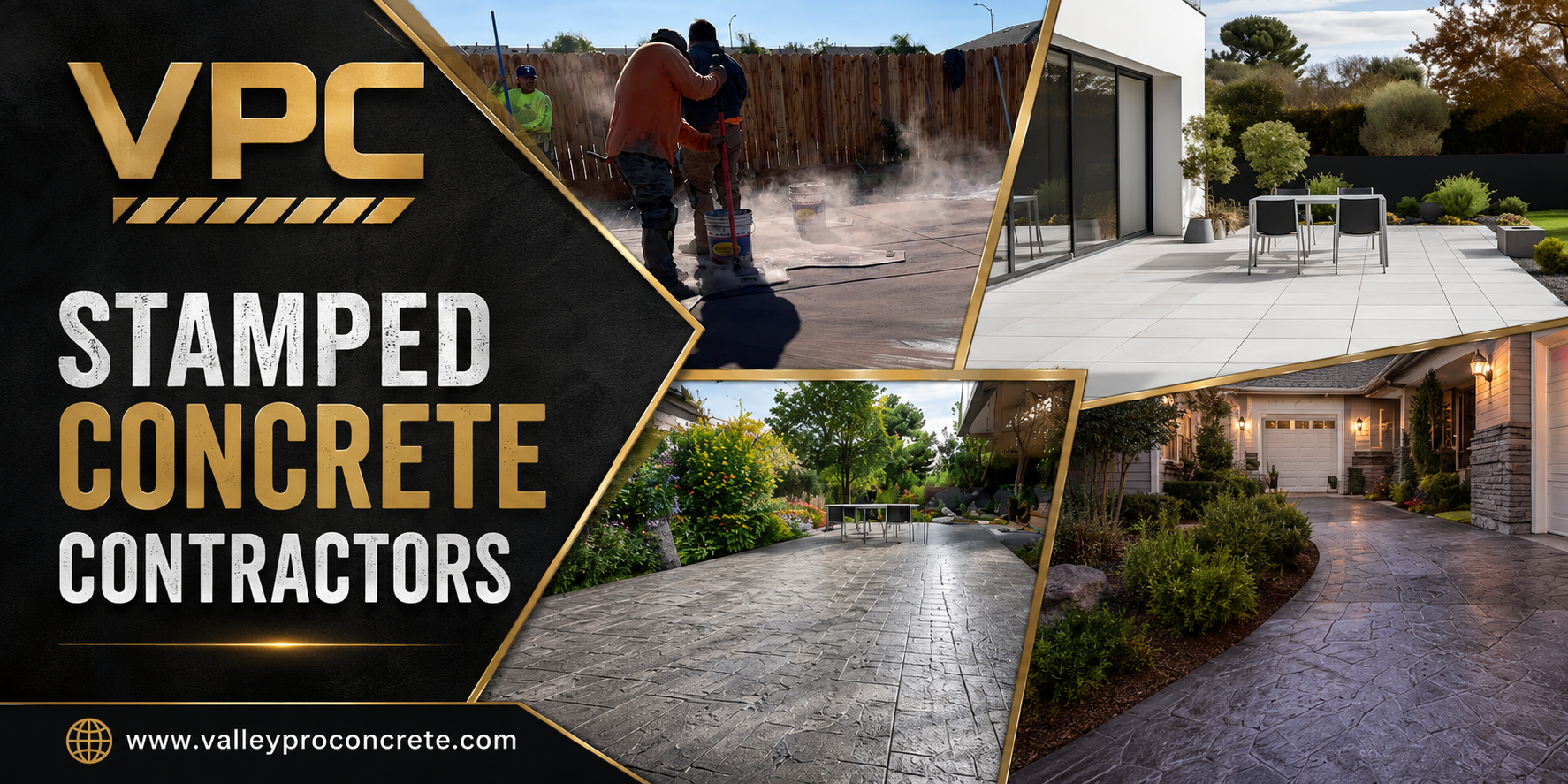
If you have ever driven past a patio or walkway that looked like it was made of hand laid stone, only to find out it was actually concrete, you already understand why this decorative option has become so popular. It gives you the look of pavers, brick, slate, or natural stone, but at a fraction of the cost and with far less long term maintenance. Still, a lot of homeowners go into this kind of project without knowing what actually happens behind the scenes, and that is where confusion, unrealistic expectations, and the occasional headache tend to creep in.
Whether you are planning a backyard patio, a front entry walkway, or a full driveway overhaul, understanding the process ahead of time makes everything smoother. It helps you ask better questions, spot a quality crew from a rushed one, and feel confident about the money you are putting into your home. At Valley Pro Concrete, we sit down with homeowners almost every week who have questions about timelines, color choices, and what a fair price actually looks like. This guide walks through all of it, so you can go into your project prepared instead of guessing.
Why Homeowners Are Drawn to This Decorative Option
Before getting into the process itself, it helps to understand why this technique has grown so much in popularity. Traditional poured concrete is functional, but let’s be honest, it can look a little plain sitting next to a nicely landscaped yard. Decorative stamping solves that problem by pressing patterns and textures into the surface while it is still workable, creating the appearance of higher end materials without the higher end price tag or the years of upkeep those materials usually demand.
There is also an emotional side to this that people do not talk about enough. A patio is where families gather for summer dinners, where kids run around barefoot, where neighbors stop by for a glass of wine on a warm evening. The look and feel of that space matters more than most people admit at first. A textured, warm toned surface simply feels more inviting than a flat gray slab, and that difference shows up in how much you actually use the space once it is finished.
What Actually Happens During the Process
Here is where a lot of the mystery gets cleared up. The work generally unfolds in stages, and knowing what each one involves helps you understand what you are paying for.
Site preparation and excavation The crew removes existing material, grades the area, and compacts the base. This step rarely gets much attention from homeowners, but it is arguably the most important part of the entire job. A poorly prepared base is the number one reason decorative surfaces crack, sink, or shift within a few years.
Forming and reinforcement Wooden or metal forms are set to define the shape and edges of the space. Steel mesh or rebar is often added for reinforcement, especially in colder climates where freeze and thaw cycles put extra stress on the slab.
Pouring and coloring Once the concrete is poured, color is introduced. This can be done through an integral color mixed directly into the concrete, a color hardener applied to the surface, or a combination of both for depth and variation. This is one of the more skill dependent steps, since timing has to be precise.
Stamping the pattern While the concrete is still soft but firm enough to hold a shape, textured mats are pressed into the surface. This is the step people usually picture when they imagine the finished product. It can mimic cobblestone, flagstone, wood planks, brick, and dozens of other patterns.
Curing, sealing, and cleanup After the pattern is set, the surface cures for a period before sealer is applied. Sealing protects the color, adds a subtle sheen, and helps the surface resist staining and weather damage over time.
Reliable stamped concrete contractors will walk you through each of these stages before work even begins, so there are no surprises once the crew shows up.
Setting Realistic Timelines
One of the biggest sources of frustration on any construction project is a mismatch between expectation and reality. A small patio might be completed in two to four days, while a larger driveway or multi zone backyard project could take a week or more depending on weather, curing time, and design complexity. Rain, extreme heat, and humidity can all push timelines back, and a contractor who is upfront about that possibility from day one is showing you they respect your time and your budget.
It also helps to ask about curing time separately from installation time. The surface may look finished within a day or two, but full cure strength typically takes about a month. During that window, heavy furniture, vehicles, or aggressive cleaning should be avoided.
Questions Worth Asking Before You Sign Anything
A written estimate should never be the only thing you rely on. Before hiring, ask about licensing and insurance, warranty coverage on both labor and materials, and whether the crew doing the physical work is the same crew that showed up to give the quote. Ask to see photos of completed projects, ideally ones similar in size and pattern to what you are envisioning. Reputable stamped concrete contractors are usually happy to share references or point you toward recent reviews, because confident professionals do not mind being checked out.
Pricing is another area where clarity matters. Costs vary based on square footage, pattern complexity, color layering, and site conditions like slope or drainage. A price that seems dramatically lower than every other quote you received is worth a second look, since it may signal shortcuts on base preparation or material thickness that will not show up until problems appear later.
Communication Makes or Breaks the Experience
Beyond the technical steps, the working relationship itself matters more than people expect. A good crew keeps you updated, explains delays honestly, and treats your property with respect throughout the job. Small things, like protecting landscaping during excavation or cleaning up debris each day, say a lot about how a company operates.
It is completely normal to feel a little anxious handing over a portion of your yard or driveway to a crew of strangers for several days. That is a fair feeling, and a trustworthy team understands it. Look for stamped concrete contractors who take the time to answer your questions without rushing you, who explain the “why” behind their recommendations, and who treat your home the way they would treat their own. That kind of transparency tends to carry through into the quality of the finished work.
Long Term Care Once the Project Is Done
Ongoing maintenance is simpler than most people assume. Periodic resealing, usually every two to three years depending on climate and foot traffic, keeps the color vibrant and the surface protected. Routine sweeping and occasional gentle washing handles most day to day upkeep. Avoiding harsh de-icing chemicals in winter months also helps preserve the sealer and color longevity.
Final Thoughts
Choosing to work with skilled stamped concrete contractors is really about peace of mind as much as it is about aesthetics. When you understand the stages of the process, set realistic expectations around timing, and ask the right questions upfront, the entire experience becomes far less stressful and far more rewarding. A well built, well finished surface should hold up for decades, adding both function and character to your home.
At Valley Pro Concrete, our team has guided homeowners through this process from the very first consultation to the final sealed finish, and we know how much smoother things go when everyone starts on the same page. If you are considering a stamped patio, walkway, or driveway, reach out and let’s talk through what your space could look like.
Frequently Asked Questions
1. How long does stamped concrete typically last?
With proper installation and routine sealing, a well maintained surface can last twenty five years or more, even in areas with harsh winters or heavy foot traffic.
2. Is stamped concrete slippery when wet?
Not usually, as long as a non slip additive is mixed into the sealer during application. This is a standard step that any experienced crew should include without being asked.
3. Can existing plain concrete be converted into a stamped design?
In some cases, an overlay can be applied to existing slabs that are still structurally sound, though new pours generally offer more design flexibility and a longer lifespan.
4. How much does a typical project cost?
Pricing depends heavily on square footage, pattern choice, and site conditions, but decorative stamped surfaces generally cost somewhat more than plain poured concrete due to the added labor and materials involved in coloring and texturing.
5. What is the best time of year to schedule this kind of project?
Moderate temperatures, typically spring or early fall, tend to produce the most consistent results, since extreme heat or cold can affect curing time and color development.